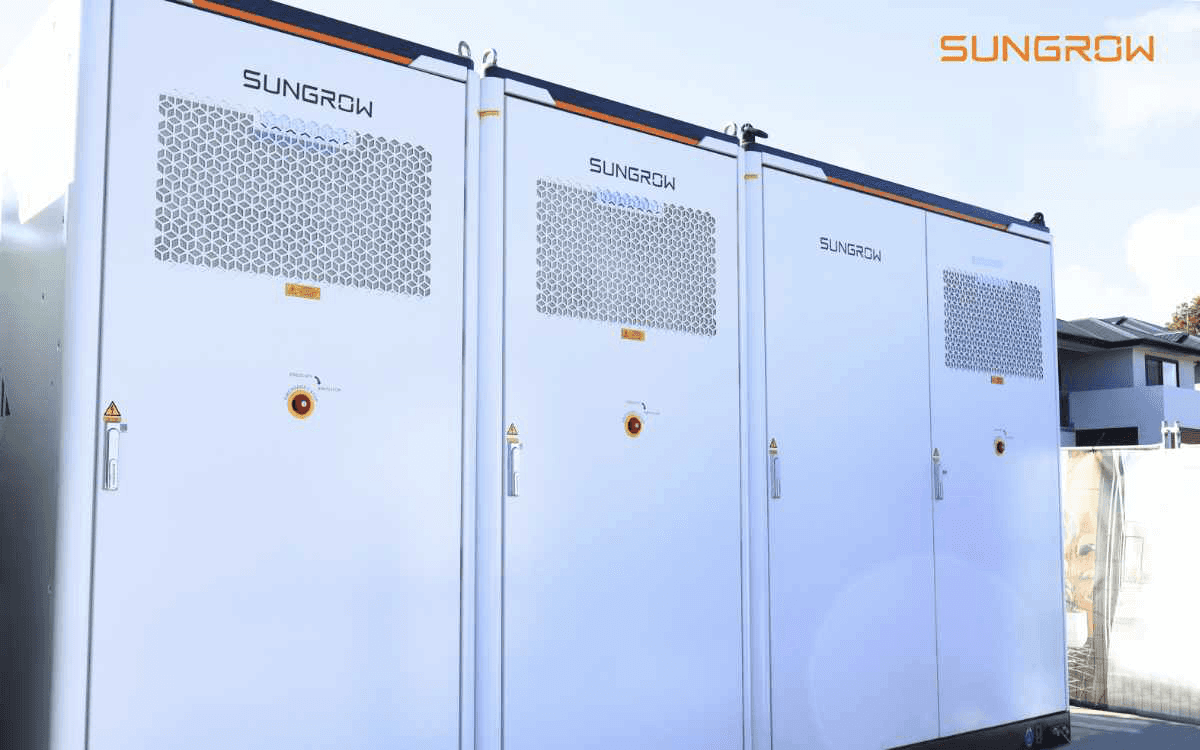
An increasing number of Belgian businesses are choosing a battery system
The Belgian energy market is changing at breakneck speed. Businesses are facing rising energy costs, unpredictable tariffs, increasing pressure on the electricity grid, and the need to operate more sustainably. In this new reality, more and more companies are investing in battery systems, also known as BESS (Battery Energy Storage Systems).
What was once a niche solution has now evolved into a strategic choice for companies in industry, retail, logistics, and agriculture.
1. The growing need for energy storage in Belgium
Flanders has made it clear that energy storage will become a top priority by 2025–2026. Due to the growth of solar panels and increasing grid congestion, energy experts now consider a battery system no longer “a luxury”, but almost essential for controlling costs and grid load. With a BESS system, companies can save up to 85% on their energy bill, primarily through peak shaving and smart energy management.
This trend is a direct result of an energy market that is becoming increasingly difficult to predict. High imbalance costs, variable market prices, and restrictions on feed-in are driving companies to seek greater control.
2. Belgium is investing heavily in large-scale battery infrastructure
Not only businesses, but also energy producers are investing substantially in battery storage. In 2025, Belgium’s largest battery park was inaugurated in VillesurHaine, with 200 MWh of storage capacity and 50 MW of power, enough to supply the high-voltage grid for four hours.
These types of projects demonstrate how crucial batteries are becoming for the stability of our grid. They also show that energy storage is not only a “business application”, but a key element in the national energy transition.
For companies, this means they can fully benefit from the same technology, but in smaller, scalable systems.
3. Battery systems deliver direct financial benefits for businesses
✓ Reduce peak consumption
Many Belgian companies pay extra for consumption during peak hours. A commercial battery absorbs these peaks by using previously stored energy, significantly reducing annual costs.
✓ Increase self-consumption of solar energy
Solar panels often generate more at times when businesses do not immediately need that energy. A battery stores this surplus, resulting in a drastic increase in self-consumption.
✓ Purchase electricity at lower cost
Companies can purchase energy at night or during periods of low market prices, and use it later when electricity is expensive.
✓ Emergency power & business continuity
In the event of power outages, business operations remain uninterrupted. This is particularly important for manufacturing companies, cooling facilities, data centres, and logistics businesses.
4. Tax incentives make batteries even more attractive in 2025–2026
The government is actively encouraging battery storage.
In 2025–2026, companies receive:
40% thematic investment deduction (for self-employed professionals and SMEs)
30% investment deduction (for large companies)
Combinable regional subsidies
These support measures ensure that the payback period of a battery system is considerably shorter than it was a few years ago.
5. Batteries are becoming a solution to grid congestion
Belgium is increasingly facing grid congestion: too much production at times of low demand. As a result, companies are sometimes unable to install additional solar panels or face restrictions on their grid connection. Batteries then serve as an immediate buffer:
They absorb solar peaks
They relieve the grid
They make expansion possible again
Experts emphasise that battery systems are one of the few technologies that relieve pressure on both the business and the grid.
6. The Belgian battery market is growing rapidly
Research agencies and energy companies indicate that a major increase in battery installations is expected in both businesses and large industrial sites. This growth is driven by:
Faster rollout of solar panels
Declining battery prices
Rising energy imbalance costs
New tariff structures (capacity tariff)
Growing demand for flexible energy infrastructure
From SMEs to logistics hubs: demand is rising across all segments.
Conclusion: Commercial batteries are no longer a trend — they are a necessity
The overall picture is clear:
Energy prices remain unpredictable
The grid is under increasing strain
The government is promoting battery storage
Solar energy is becoming increasingly important
Businesses are seeking certainty and control
A battery system offers exactly that: stability, savings, and independence.
Belgian companies that invest now are building a competitive advantage in an energy market that is becoming more volatile every year. Those who choose a battery solution today are choosing certainty in an uncertain market.